
Flowers are selling. But are you charging enough for them?
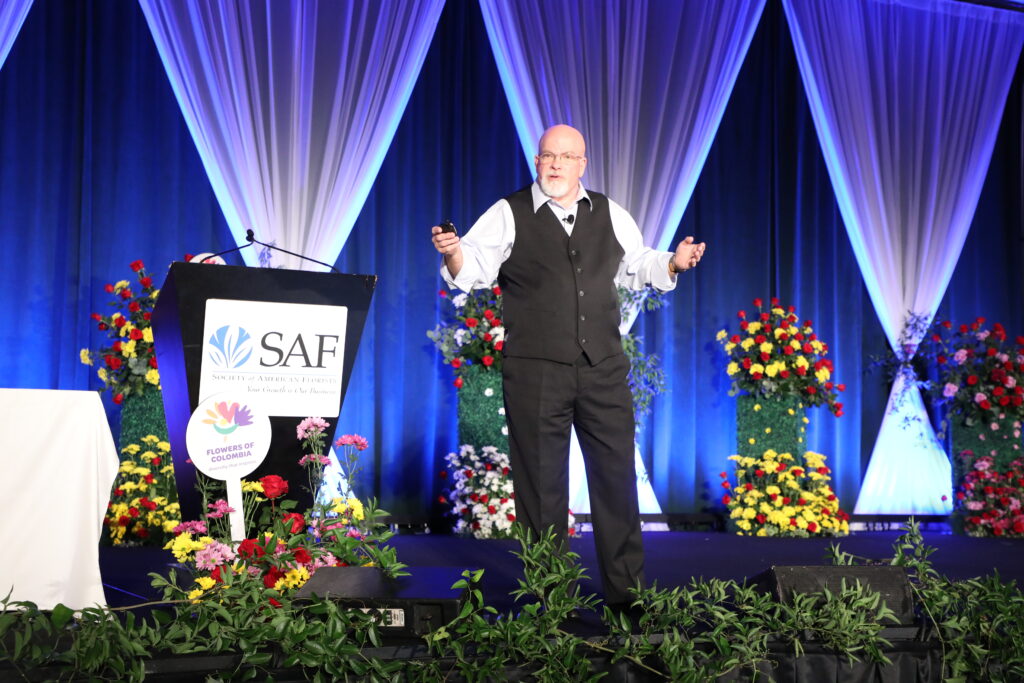
As inflation, tariffs and economic uncertainty continue to pressure floral businesses, those questions are top of mind heading into the second half of 2026. At SAF Amelia Island 2026, the Society of American Florists’ annual convention Aug. 18-20, SAF Chief Economist Charlie Hall, Ph.D., will tackle them head-on.
In his keynote session, “Economic Reality Check: Leading Through Uncertainty,” Hall will translate economic trends into practical guidance for floral operators — with a particular focus on how businesses can adjust prices while monitoring customer response and protecting profitability.
The economic backdrop makes his session especially relevant. Annual inflation climbed to 3.8% in April, driven largely by energy and gasoline costs that ripple directly into floral supply chains through higher transportation, freight and logistics expenses. Tariffs are adding further pressure, particularly on imports from Colombia and Ecuador, two of the industry’s most critical sourcing countries. Fertilizer costs and tightening freight capacity are squeezing margins further.
“The supply side is where we’re feeling the pressure,” Hall said last week during SAF’s Ultimate Roundtable, a virtual event for Ultimate-level members.
Trade policy uncertainty compounds the challenge. More changes to trade policy are expected later this year, leaving floral businesses with little clarity on their cost structure heading into the fall and holiday season.
And yet, consumer demand has remained resilient — and florists who held the line on pricing saw results. According to an Ipsos survey conducted for SAF after Mother’s Day, 40% of Americans purchased flowers or plants for the holiday, the highest participation rate ever recorded in the survey’s history. And while the Ipsos survey found that the average Mother’s Day spending declined this year across all types of retail outlets, an SAF retailer survey found that 73% of respondents reported higher average order values compared to the previous year.
“The job for the rest of 2026 is going to be managing costs and holding the line on price,” Hall said.
His core message on pricing: the only way to know how much customers will absorb is to test it.
“You don’t know what your price inelasticity and demand is until you test it,” Hall says. “You can’t do it any other way.”
Beyond pricing, Hall will provide insight on the economic signals that matter— and how operators can keep making smart decisions even when the economic picture remains murky.
“Don’t let uncertainty squash your strategic plan,” Hall says. “Don’t be afraid of making that strategic investment.”
Click here to learn more about SAF Amelia Island 2026 and register.
Amanda Jedlinsky is the senior director of content and communication for the Society of American Florists.