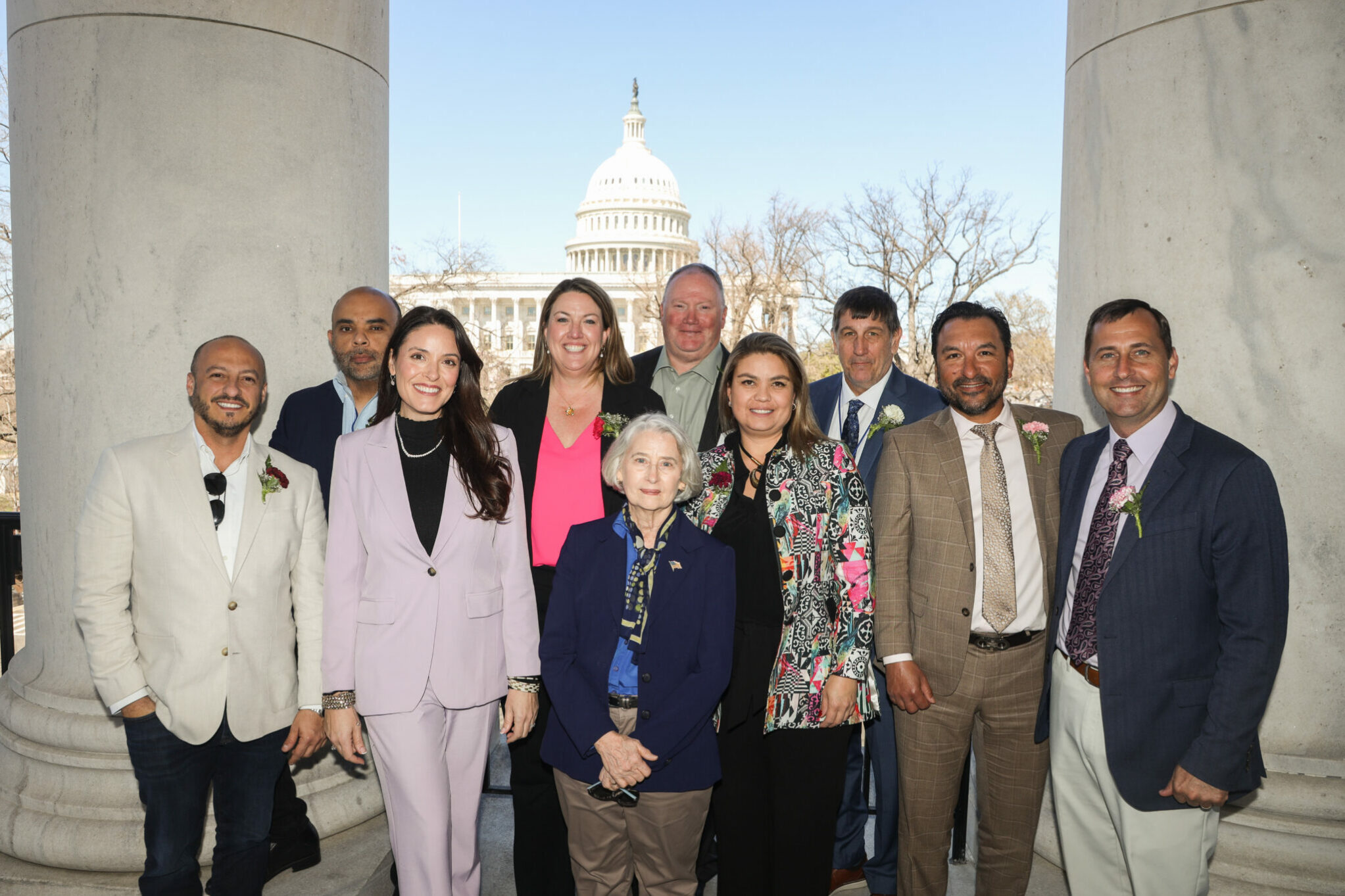


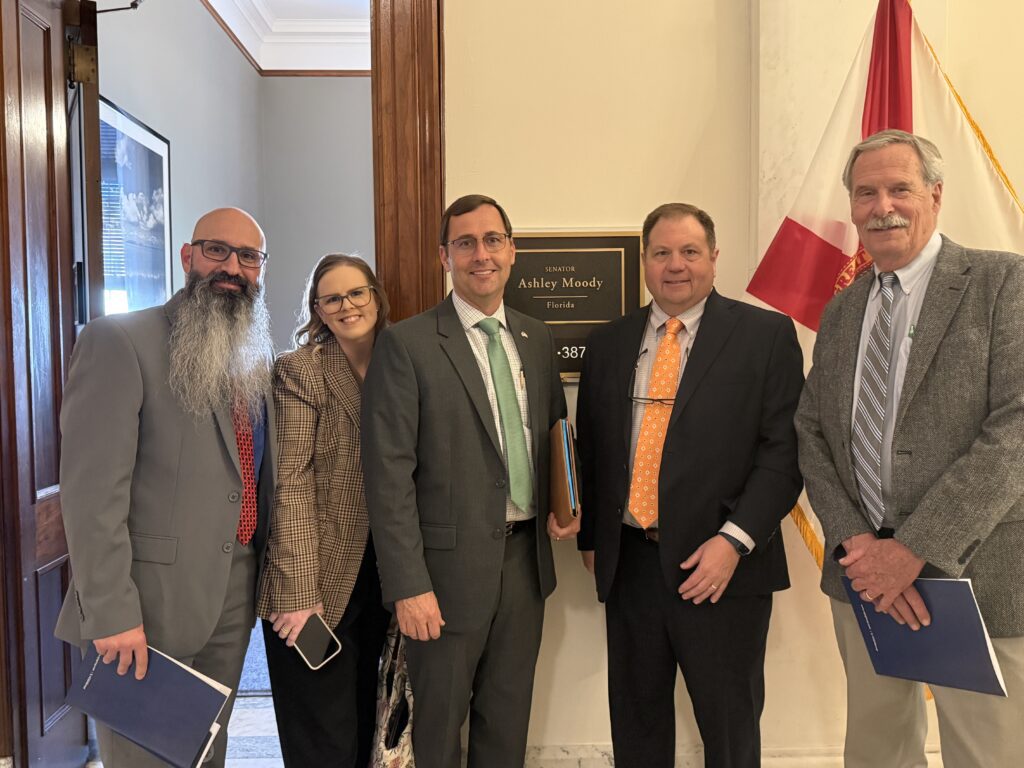
The Society of American Florists’ push to protect funding for the Floriculture and Nursery Research Initiative (FNRI) is already showing results in Washington.
Just weeks after floral industry leaders met with congressional offices during SAF’s Capitol Hill fly-in, the House Appropriations Committee adopted the organization’s requested language to keep FNRI funding at no less than the fiscal year 2026 level. FNRI funding has grown from $500,000 to $6.4 million in large part due to SAF advocacy.
The funding language — along with broader specialty crop provisions in the House Farm Bill and growing awareness of floriculture’s economic challenges — signals early momentum for several of SAF’s top advocacy priorities.
“The fact that the FNRI funding is in the House report language right at the outset is certainly good news,” says SAF Senior Lobbyist Joe Bischoff, Ph.D. “That’s exactly the language we asked for.”
FNRI supports research into mechanization, automation, pest and disease management, post-harvest handling and production efficiency — areas critical to floriculture businesses navigating rising labor costs and operational pressures.
The House report also encourages USDA research into breeding programs for insect and disease tolerance, integrated pest management, biological controls and innovations in automation and mechanization, including unmanned aerial systems.
Based on recent conversations with Senate offices, Bischoff says that he is optimistic the Senate will maintain support for FNRI as appropriations discussions continue. Senate consideration of the agriculture appropriations bill is expected later this spring or early summer.
Farm Bill Advances with Specialty Crop Support
At the same time, the House recently passed the Farm, Food, and National Security Act of 2026, moving the long-delayed Farm Bill process forward.
According to Bischoff, the legislation contains several provisions beneficial to specialty crop agriculture, including support for mechanization research, crop insurance improvements and specialty crop programs.
“There are a lot of good things in this bill for specialty crops,” Bischoff says.
The bill also reflects broader congressional attention to issues raised during SAF’s April fly-in, where industry members emphasized the challenges facing floriculture businesses, including weather-related losses, rising input costs and exclusion from some federal agricultural assistance programs.
As part of the House Farm Bill process, U.S. Rep. Randy Fine, R-Fla., introduced an amendment after his aide met with SAF members aimed at expanding specialty crop assistance eligibility to include floriculture and nursery crops. While the amendment was not ultimately included in the final House package — and was not part of SAF’s legislative ask — the effort underscored that lawmakers were listening to concerns raised by industry members during meetings.
“Our issues were heard and efforts were made to try to address some of the concerns that were raised,” Bischoff says.
More Advocacy Work Ahead
While the House actions are encouraging, much of the legislative process still lies ahead.
Senate Agriculture Committee staff are continuing work on their version of the Farm Bill, and appropriations negotiations are expected to continue into the summer.
SAF is also continuing to monitor tariff developments and ongoing Section 301 trade investigations and the future of the U.S.-Mexico-Canada Agreement (USMCA), which governs trade among the three countries. The administration is expected to begin reassessing parts of the agreement this summer — conversations that could ultimately influence agricultural trade policy, cross-border supply chain costs and broader market conditions affecting floriculture businesses.
Amanda Jedlinsky is the senior director of content and communications for the Society of American Florists.